
GOAN SAUSAGES JOURNAL
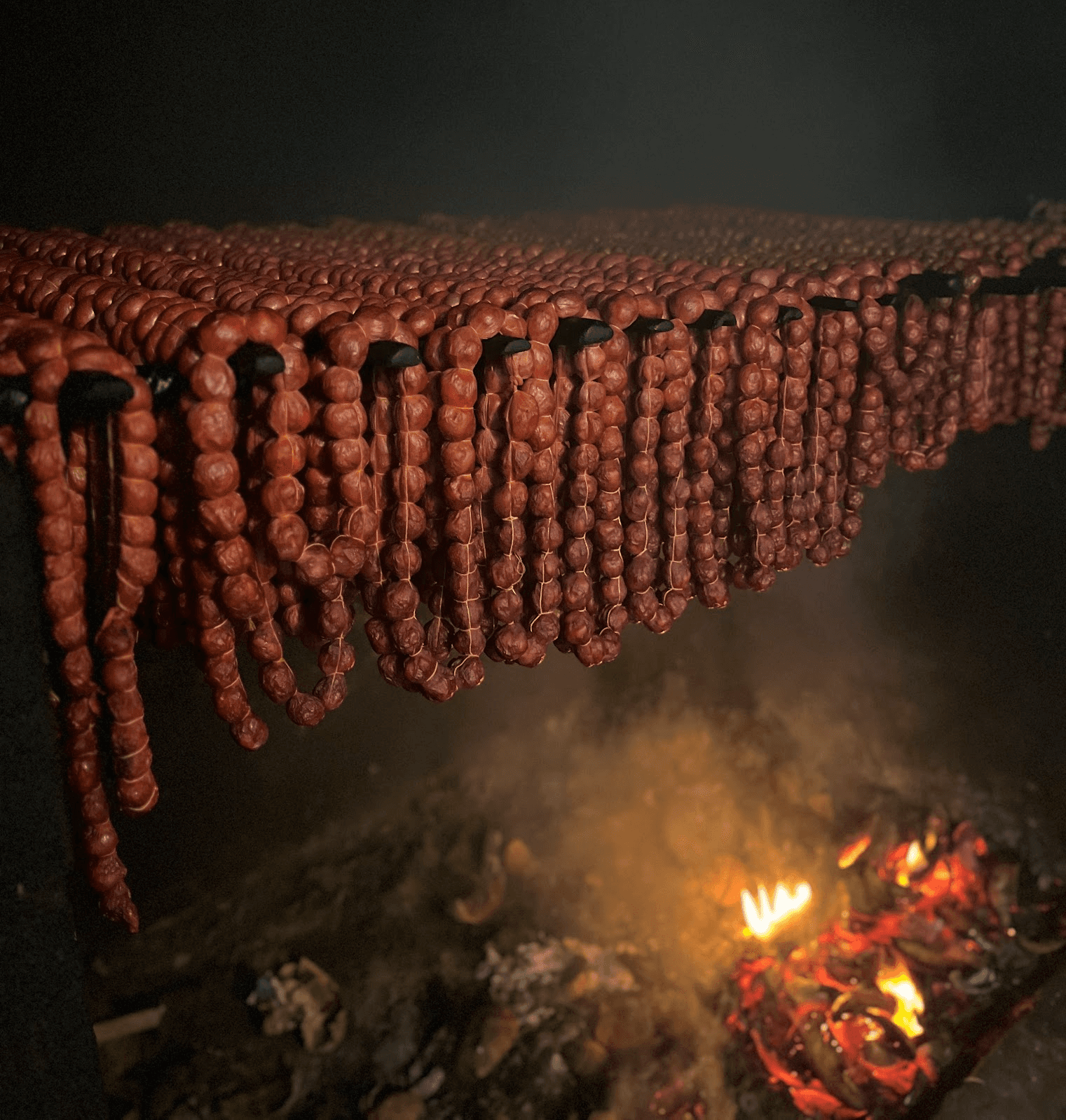
Goan sausages have gotten popular enough that you'll now find versions in supermarket freezers that barely resemble what a Goan household actually makes at home. If you've ever bought a pack that looked right but tasted flat, thin, or oddly artificial, here's what actually separates the real thing from a shortcut version — so you know what to look for next time.
Look at the colour and texture, not just the packaging
A properly cured Goan sausage has a deep, rich reddish-brown colour that comes from real chilli and slow curing in vinegar — not a bright, uniform red that looks almost dyed. The texture should be firm but not rubbery, with visible flecks of fat and spice rather than a smooth, processed-looking paste.
Ask how it was dried — sun-dried isn't the same as smoked
This is the biggest difference between mass producers and traditional makers. Sun-drying is fast and cheap, and it's what most large-scale sausages go through today. Proper Goan sausage, the way it's been made for generations, is smoked slowly over a wood fire for days. Smoking adds a depth of flavour sun-drying simply can't, and it cures the meat more thoroughly. If a seller can't tell you how their sausage was dried, that's usually because it wasn't done the traditional way.
Check the vinegar — toddy vinegar vs. the generic kind
Traditional Goan sausages are cured in toddy vinegar (made from fermented coconut palm sap), which gives a distinct tang you won't get from plain white or synthetic vinegar. Mass producers often substitute cheaper vinegar to cut costs, and you can usually taste the difference — toddy vinegar has a rounder, slightly sweet sourness rather than a sharp, one-note tang.
The old test still works: it should be edible raw
There's a long-standing saying among Goan sausage makers that a properly cured sausage should be safe and good enough to eat raw — a sign that the curing process was done fully and correctly, not rushed. You obviously don't need to test this yourself, but it tells you something: makers who stand by that standard are the ones taking the actual curing time seriously, rather than relying on refrigeration to cover for a shortcut process.
Where this leaves you as a buyer
None of this means you need to become a sausage expert before your next purchase — it just means it's worth asking a seller two questions: how long was it cured, and was it smoked or sun-dried? A maker who's proud of their process will usually tell you plainly, often unprompted.
At Pork And More, ours are hand-cured in toddy vinegar using our granny Eliza E. Crasto's recipe, then smoked slowly over a wood fire — the traditional way, not the fast way. Come taste the difference for yourself.
Order fresh sausages: 083295 05767 or through our online ordering page at porkandmore.com Find us: Dovandem, Fatorda, Madgaon, Goa 403602